
James Hardie Site Prep & Utilities: The Santa Clarita Owner’s Guide
James Hardie-compatible site prep and utilities for Santa Clarita ADU projects typically run $8,500-$18,000 installed, depending on trench length, existing panel capacity, and whether we’re tying into city sewer or installing a septic solution. We stock the critical James Hardie interface components - moisture barriers, fastening systems, and utility penetration flashings - and coordinate same-day material pulls from our Canyon Country staging yard for active jobs. Most Santa Clarita owners discover a site prep or utilities issue when their James Hardie siding order arrives but the foundation isn’t cured, or when the existing electrical panel won’t accept the ADU load and the Hardie installation crew is already scheduled.
Which James Hardie Models This Applies To
James Hardie doesn’t manufacture site prep or utilities components directly - they specify the conditions under which their HardiePlank, HardiePanel, and HardieTrim products perform to warranty. The critical match is between your Hardie product line and the moisture management, fastening, and utility penetration details we install underneath and through it.
HardiePlank lap siding (the 5/16-inch, 7.25-inch exposure product most common on Santa Clarita ADUs) requires a drainable housewrap or felt-backed water-resistive barrier with cap fasteners placed 16 inches on-center, minimum 3/4-inch from panel edges. HardiePanel vertical siding (4×8 and 4×10 sheets) needs a level, plumb substrate within 1/8 inch over 10 feet - any utility chase or electrical rough-in that bows the framing voids the James Hardie 30-year limited warranty. HardieTrim boards around windows and doors require pre-flashed rough openings with pan flashing at sills; we see the most warranty disputes in Santa Clarita when trim meets stucco transitions and the utility penetrations (hose bibs, electrical conduit, gas lines) weren’t planned before the Hardie order shipped.
We specify OEM James Hardie fasteners and flashings - their ColorPlus touch-up kits match their factory finish, and third-party coil stock rarely holds the same thermal expansion coefficient through Santa Clarita’s 110-degree summer cycles. For utility rough-ins, we use after-market electrical and plumbing components only where they exceed James Hardie’s stated performance spec; otherwise, we follow their published installation requirements to the letter. The drawing set either clears the counter or it doesn’t. We build ones that do.
Signs Your James Hardie Site Prep & Utilities Is Failing

- Hardie panels are cupping or pulling at fasteners. This usually means the WRB (water-resistive barrier) underneath failed to drain, or the utility penetration wasn’t flashed before siding went up. Santa Clarita’s Santa Ana wind events drive rain sideways into unsealed gaps; we see this most on west-facing walls in Sand Canyon and Bouquet Canyon builds.
- Soft spots near hose bibs, electrical meters, or gas risers. James Hardie fiber cement is impervious to rot, but the OSB or plywood behind it isn’t. If the site prep crew didn’t install pan flashing at utility penetrations, water tracks along the pipe and saturates the substrate. By the time you see exterior staining, the framing is compromised.
- Cracking at inside corners where HardieTrim meets field siding. This is almost always movement in the framing beneath, caused by undersized utility trenches settling after backfill, or by a gas line installation that disturbed the compacted base. James Hardie allows minimal flex; the substrate has to be stable before siding goes on.
- Electrical panel buzzing or warm breakers after ADU connection. Your existing service may have been adequate for the main house, but adding a 200-amp subpanel for a detached ADU with electric heat and a mini-split can push an aging panel past capacity. James Hardie siding crews won’t wait for utility upgrades; we coordinate both trades so the panel swap happens before the siding scaffold comes down.
- Sewer backup or slow drains in both structures after ADU tie-in. Santa Clarita’s older Canyon Country neighborhoods east of Soledad Canyon Road often have 4-inch clay laterals with root intrusion. Tying a new ADU into a compromised line guarantees a callback. We camera the lateral during site prep, not after the toilet overflows.
Replacement Cost & What’s Included
| Component | Typical Range in Santa Clarita | What Drives the Variance |
|---|---|---|
| Electrical service upgrade (200A panel, trench, conduit) | $4,200-$7,800 | Distance from pole, SCE coordination timeline, underground vs. overhead service |
| Sewer lateral replacement or septic design | $3,500-$8,500 | City sewer availability, percolation test results, depth to main |
| Water service extension / meter split | $1,800-$3,200 | Cast iron vs. copper, SCVWD meter set fees, street-to-structure distance |
| James Hardie-specific moisture barrier & fastening system | $2,200-$4,800 | Wall area, HardiePanel vs. HardiePlank, ColorPlus vs. primed-only |
| Utility penetration flashing package | $800-$1,600 | Number of penetrations, custom fabricated vs. standard boots |
These figures include parts, labor, permits, and inspections - one written price under Haven Standard Clause 1, locked before work starts. No change orders for “unforeseen” conditions we should have caught in site prep. We pull all permits and coordinate SCE, SCVWD, and city inspections; the permit set includes every utility detail the inspector will ask for. Workmanship warranty runs 365 days from final inspection, backed in writing.
DIY or Call Us?
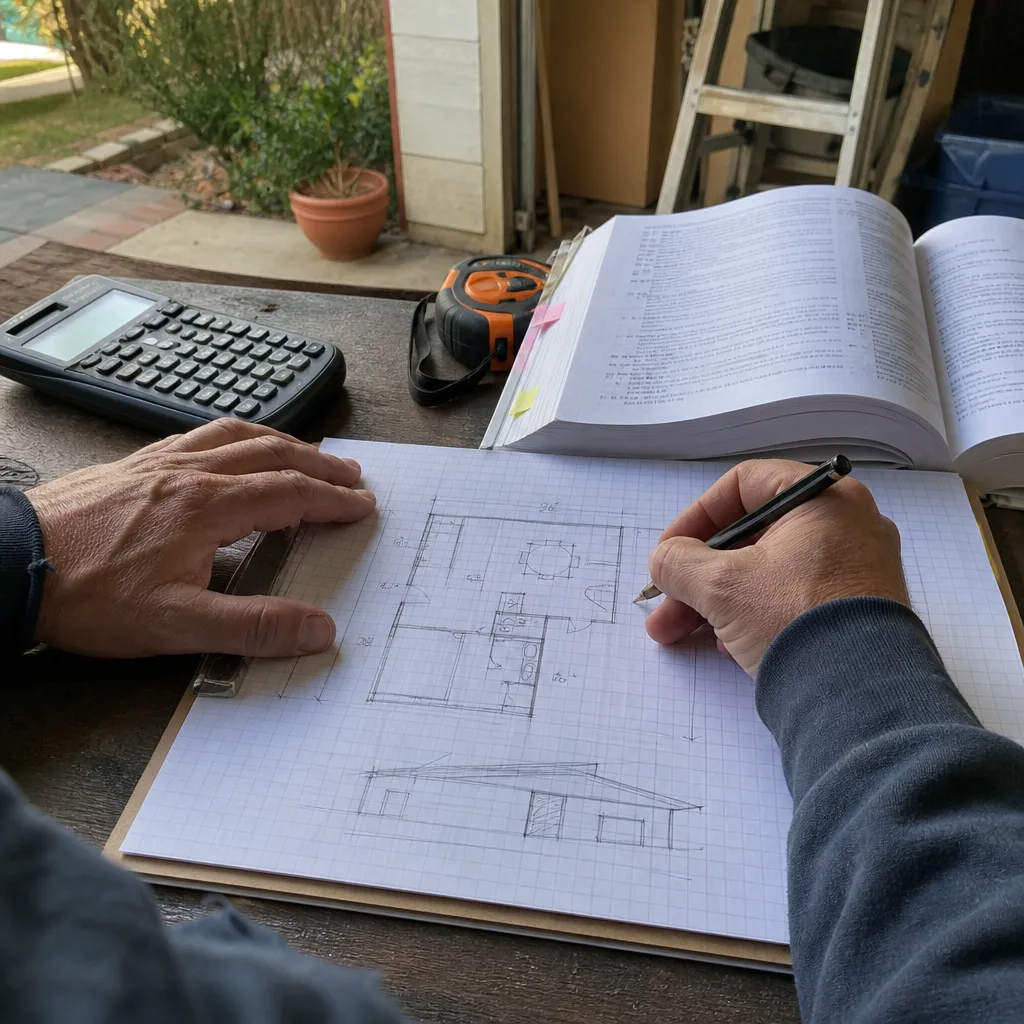
There’s a short list of checks a Santa Clarita owner can safely make: verify your electrical panel ampacity (printed on the main breaker), confirm your water meter size (usually stamped on the brass body), and walk the property for obvious sewer cleanout locations. Don’t dig, don’t pull meter bases, and don’t assume a YouTube trenching tutorial accounts for SCE’s 18-inch minimum cover over primary voltage lines in Santa Clarita’s rocky soils.
Where DIY goes wrong: trenching through unmarked gas lines (SoCalGas requires 811 locates, but private lines from meter to structure are owner responsibility), installing Hardie fasteners with the wrong embedment depth (voids warranty), and sizing electrical loads without Title 24 compliance calculations. We’ve rebuilt three Santa Clarita projects in the last two years where the owner started the trench and hit a private water line that wasn’t on any city map. The fix cost more than our original quote.
Call (747) 294-4817 for a free estimate. We’ll walk the site, camera the lateral if needed, and give you a written price that includes every line item above.
FAQs
Properly installed moisture barriers and fastening systems last the life of the siding - 30-plus years - but utility infrastructure is the variable. Electrical panels in Santa Clarita’s heat cycles typically need evaluation at 25 years; clay sewer laterals in Canyon Country neighborhoods fail at 40-60 years regardless of what siding you choose. Call (747) 294-4817 and we’ll assess what’s actually aging on your property.
Sometimes. A partial panel upgrade (adding a subpanel instead of full service replacement) works if your existing panel has adequate busbar capacity and physical space. Spot repairs on sewer laterals with epoxy lining are possible if the pipe is structurally sound, but we won’t spec them without a camera inspection. Under Haven Standard Clause 5, we document what we found and give you both options in writing.
Typical timeline is 3-5 weeks from permit submission to final utility activation in Santa Clarita, assuming standard SCE and SCVWD coordination. James Hardie siding installation follows once the substrate is certified level and all penetrations are flashed. We don’t start siding until utilities are signed off; rushing this sequence is how warranties get voided.
We stock James Hardie fasteners, flashings, and WRB systems at our Canyon Country yard, and we maintain same-day relationships with Santa Clarita electrical and plumbing suppliers for panels, conduit, and sewer materials. We don’t stock full electrical panels (too many amperage configurations), but we can typically source and install within 48 hours of permit approval.
Written by Nadia Ellery, Owner & Principal Designer, Ellery ADU Studio Santa Clarita at Ellery ADU Studio Santa Clarita, serving Santa Clarita and nearby areas.