
Last updated September 25, 2026
Seasonal ADU Care for Santa Clarita: Year-Round Homeowner’s Guide
The Woolsey and Tick fires reshaped drainage patterns across the Santa Clarita hills, and an ADU built after 2019 on a lot in a previously burned watershed faces accelerated erosion around its foundation during the first significant rain event. That risk is invisible in July, catastrophic in January, and preventable only if the homeowner knows what to look for between seasons. This guide sequences care tasks by the climate events that actually drive damage in the Santa Clarita Valley: thermal expansion at 100°F-plus, ember intrusion during fire season, clay-soil drainage failure in winter storms, and particulate loading after Santa Ana winds.
Quick Answer
Seasonal ADU care in Santa Clarita means four distinct maintenance windows tied to local climate stressors: summer thermal inspection of siding and sealants, fall ember-vent screening before fire season peaks, winter drainage verification for clay-heavy soils, and spring HVAC coil cleaning after Santa Ana particulate deposition. A year-round utility sub-meter log catches plumbing leaks before they reach the slab. Most failures we document in Santa Clarita could have been prevented with seasonal inspection at the component level.
Table of Contents

- Summer Thermal Expansion: What 100°F-Plus Days Do to Your ADU
- Fall Fire-Season Prep: Ember-Resistant Vents in FHSZ Zones
- Winter Rain Readiness: Drainage for Santa Clarita’s Clay Soils
- Spring HVAC Recovery: Post-Santa Ana Coil and Filter Service
- Year-Round Utility Monitoring: The Sub-Meter Leak Detection System
- Material-Specific Care: Prefab and Modular Systems
- Common Mistakes to Avoid
- When to Call a Professional
- Frequently Asked Questions
- The Bottom Line
Summer Thermal Expansion: What 100°F-Plus Days Do to Your ADU
Santa Clarita averages more than 300 sunny days annually, with summer peaks regularly crossing 100°F. For an ADU, sustained heat is not a comfort issue. It is a dimensional stress event.
Fiber cement siding - the material specified on most new detached ADU in Santa Clarita projects we deliver - expands and contracts with temperature swings. The coefficient is small, but the delta is not. A south-facing wall can cycle from 65°F at dawn to 140°F surface temperature by mid-afternoon. Over a season, that movement works caulk joints loose, opens gaps at trim interfaces, and fatigues the paint film.
We inspect summer damage in three zones:
- Window perimeters. Check caulk beads where the window frame meets the siding. A bead that has pulled away from one side but adheres to the other has reached end-of-life. Re-caulk before monsoon moisture arrives in late summer.
- Siding butt joints. Factory-finished fiber cement holds color well, but field-cut ends are porous. If the factory seal has degraded, the cut end will swell slightly and telegraph through the paint as a raised line. Address before water intrusion begins.
- Corner trim and fascia. These pieces experience the most directional stress. A gap wider than 1/16 inch at a miter joint will admit water when Santa Clarita’s occasional summer thunderstorms hit.
The fix is not complex: remove failed caulk, backer-rod if the gap exceeds 3/8 inch, and apply a high-quality elastomeric sealant rated for 200 percent extension. We document the condition of every joint during our ADU design and permitting in Santa Clarita site visits, and we include thermal-movement notes in the maintenance schedule we deliver at project closeout.
For garage conversion ADU in Santa Clarita projects, the existing slab is often older and less thermally stable. Expansion joints that were adequate for a garage may telegraph cracking into new finished flooring if the conversion did not include an isolation membrane. Summer is when those cracks open widest - the right season to document them for repair before winter contraction makes them harder to trace.
Fall Fire-Season Prep: Ember-Resistant Vents in FHSZ Zones
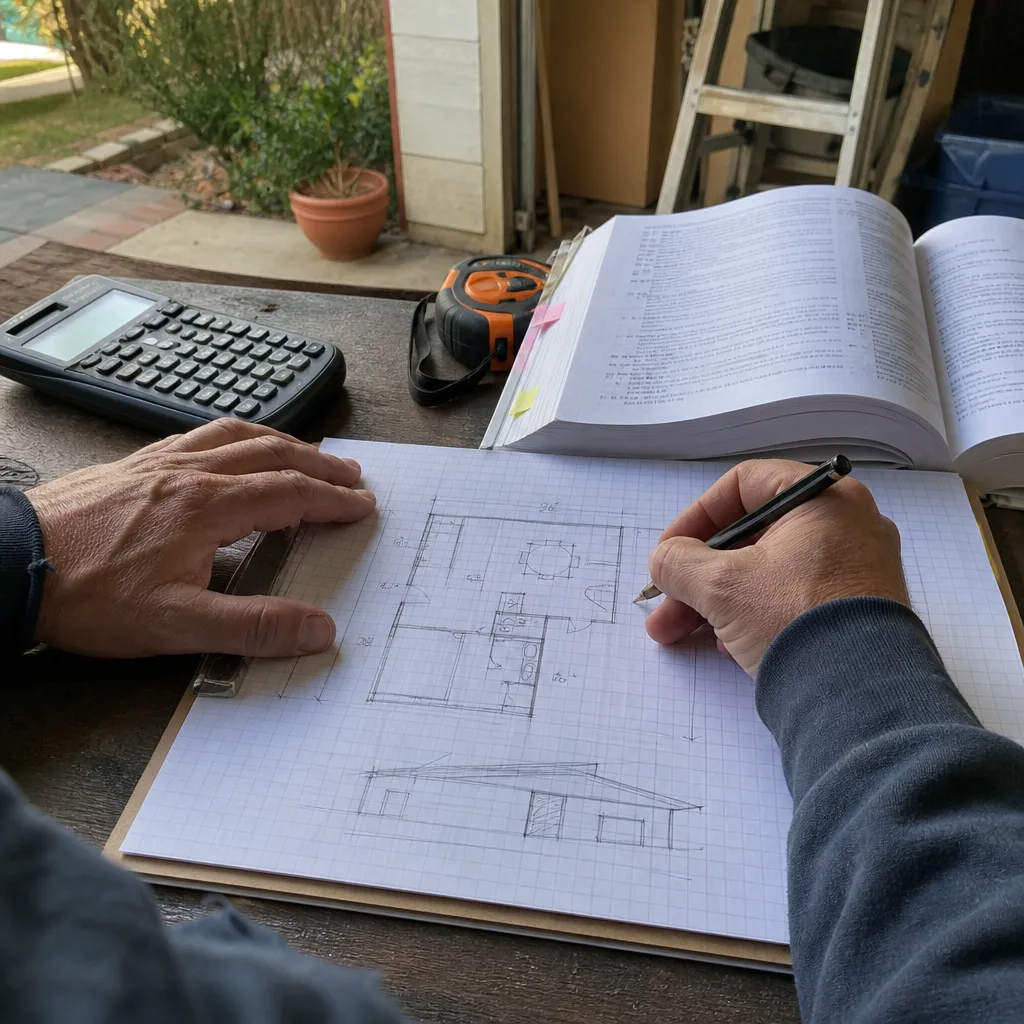
Santa Clarita sits within the Very High Fire Hazard Severity Zone (VHSZ) across broad areas, including Canyon Country, Sand Canyon, and portions of Saugus and Valencia. California Building Code Chapter 7A requires ember-resistant venting on all new construction in these zones. An ADU permitted after 2019 almost certainly has these vents. The question is whether they still function as designed.
Ember-resistant vent mesh is typically 1/8-inch or finer corrosion-resistant steel. The specification is precise because glowing embers smaller than 1/8 inch are the primary ignition source during wind-driven wildfires. Over two to three Santa Clarita fire seasons, this mesh accumulates dust, pollen, and Santa Ana-deposited particulate. The blockage reduces airflow and creates a pressure differential that can pull embers through gaps elsewhere in the envelope.
Our fall inspection protocol:
- Remove each vent cover and photograph the mesh condition - we deliver these photos to clients as part of our documented photo record on every visit.
- Measure mesh opening with a feeler gauge. Any opening exceeding 1/8 inch, or any corrosion that has reduced wire diameter, triggers replacement. Do not clean and reinstall compromised mesh.
- Verify that the vent assembly maintains its intumescent coating or baffle design, depending on the original specification. Some assemblies rely on a coating that expands when heated to seal the vent; if the coating has degraded from UV exposure, the vent is no longer code-compliant.
- Check attic and crawl space vents with the same rigor. These are often overlooked because they are not at eye level.
Replacement mesh must meet the original listing. Generic hardware-store screen does not comply with Chapter 7A, and using it can void insurance coverage after a fire loss. We specify and stock the correct replacement assemblies for the brands we coordinate, including Cover and Dvele systems, whose vent packages are tested as part of the wall assembly.
In the Santa Clarita Valley, fire season now extends well into November. We schedule this inspection in early October, before the first Santa Ana event, and we recommend homeowners in Canyon Country and Sand Canyon repeat a visual check after any significant wind event.
Winter Rain Readiness: Drainage for Santa Clarita’s Clay Soils
Santa Clarita’s soils are predominantly clay-loam and adobe, with high shrink-swell potential. In summer, these soils desiccate and crack. In winter, they shed water rather than absorb it. An ADU foundation surrounded by poorly graded soil will experience hydrostatic pressure, and if the lot sits in a post-fire watershed, the first significant rain can deliver sediment loads that overwhelm standard drainage.
The Woolsey Fire burned 96,949 acres in November 2018, including substantial watershed above Santa Clarita. Post-fire hydrology studies documented tenfold increases in peak flow rates and sediment yield in burned drainages. An ADU built after 2019 on a lot below these burn scars faces drainage demands that the original grading plan may not have anticipated.
Our winter readiness checklist is specific to Santa Clarita conditions:
- Grade inspection. Walk the perimeter with a level. Soil should slope away from the foundation at 5 percent minimum (6 inches of drop over 10 feet). In post-fire watersheds, we recommend 10 percent where space allows. Settled backfill often reverses slope toward the foundation within three to five years.
- Downspout termination. Downspouts must discharge at least 6 feet from the foundation, and the discharge point must not create a new concentration point. In clay soils, a splash block is insufficient; a buried drain line to daylight or a dry well is standard on our new detached ADU projects.
- Foundation drain verification. If the ADU has a perimeter drain, locate the cleanout or observation port and verify flow during a rain event. A drain that was adequate in year one may be partially occluded by sediment from upstream erosion.
- Retaining wall weep holes. ADUs on sloped lots in Santa Clarita often require retaining walls. Weep holes must be clear before the rainy season; clay soil migration is the most common blockage we find.
- Access road or driveway drainage. Concentrated runoff from paved surfaces can undermine ADU foundations even when the building’s own grading is correct. Check for new rills or gullying after the first storm.
For garage conversion ADU in Santa Clarita projects, the existing garage slab is typically at or below surrounding grade. The conversion must include a perimeter drain upgrade, or winter water will find the slab edge. We document this condition during our free second opinion visits and specify the correction in our written scope.
Under Haven Standard Clause 5 (No Surprises), drainage corrections identified during pre-construction survey are included in the original written price, not added as a change order after excavation begins.
Spring HVAC Recovery: Post-Santa Ana Coil and Filter Service

The Santa Ana wind season in Santa Clarita runs roughly October through March, with peak events in December and January. These winds carry particulate from the Mojave Desert, agricultural valleys, and - in post-fire years - ash and charred debris from burn scars. By spring, an ADU’s mini-split or heat pump system has ingested this loading, and efficiency has degraded measurably.
A dirty evaporator coil does not fail catastrophically. It insidiously increases energy consumption and reduces capacity. The efficiency delta is quantifiable: a coil with moderate particulate loading can increase compressor run time by 15 to 20 percent. In a Santa Clarita summer where the system runs 12 hours daily, that translates directly to the utility bill.
Our spring service protocol:
- Filter replacement. Not cleaning - replacement. Washable filters rarely restore original airflow after Santa Ana loading. We specify MERV 8 minimum for ADU systems; higher MERV ratings restrict airflow in the small ductless cassettes common to ADU builds.
- Coil inspection. Remove the cassette cover and photograph the evaporator fins. Any visible debris requires foaming cleaner and gentle fin straightening. We include this in our documented photo record.
- Condensate line flush. Santa Clarita’s hard water and wind-borne dust combine to form scale in condensate lines. A blocked line triggers the float switch and shuts the system on the first hot day.
- Outdoor coil cleaning. The condenser unit, if exposed to Santa Ana winds, loads with the same particulate. A garden hose with moderate pressure, fin comb, and coil cleaner restores design airflow.
For Mighty Buildings and Boxabl prefab systems we coordinate, the HVAC package is often a compact ductless multi-split. These systems have smaller coils and tighter fin spacing, making spring cleaning more critical than in conventional construction. We specify service access in our coordination drawings to ensure the unit is reachable without dismantling finishes.
The sub-meter we recommend for year-round monitoring (see next section) will reveal this efficiency degradation as a gradual kilowatt-hour increase. A spike in March or April, before summer cooling demand begins, is a reliable coil-loading indicator.
Year-Round Utility Monitoring: The Sub-Meter Leak Detection System
The most expensive ADU repair we encounter in Santa Clarita is not fire damage, foundation failure, or HVAC replacement. It is a slab or wall-cavity plumbing leak that ran undetected for months, destroying flooring, inviting mold, and compromising structural members.
California’s ADU code encourages but does not require separate utility metering. We specify a sub-meter on every ADU design and permitting in Santa Clarita project we deliver, not for billing purposes alone, but for diagnostic value. A sub-meter with monthly reading discipline is an early warning system with no false positives.
The protocol is simple and takes under five minutes monthly:
- Read the sub-meter at the same date each month, with no water running in the ADU.
- Record the reading in a log - we provide a template at project closeout.
- Compare to prior months and to the same month in the prior year. A 10 percent increase with no occupancy change warrants investigation.
- If the ADU is unoccupied, any movement on the meter indicates a leak. Shut the isolation valve and call for service.
In Santa Clarita’s hard-water environment, pinhole leaks in copper and degradation of PEX fittings are the most common sources. The sub-meter catches these before they surface as visible damage. We have documented cases where a 0.5 gallon-per-hour leak, invisible for eight weeks, saturated a subfloor and required $8,000 in flooring and drying work. The sub-meter would have identified this on day three.
For garage conversion ADU projects, the existing slab often has no vapor barrier or an compromised barrier. A leak in this context wicks laterally across the entire slab footprint. The sub-meter is not optional; it is essential protection.
We include sub-meter specification in our written scope under Haven Standard Clause 3 (Documented Systems), and we verify installation during our final inspection walkthrough.
Material-Specific Care: Prefab and Modular Systems
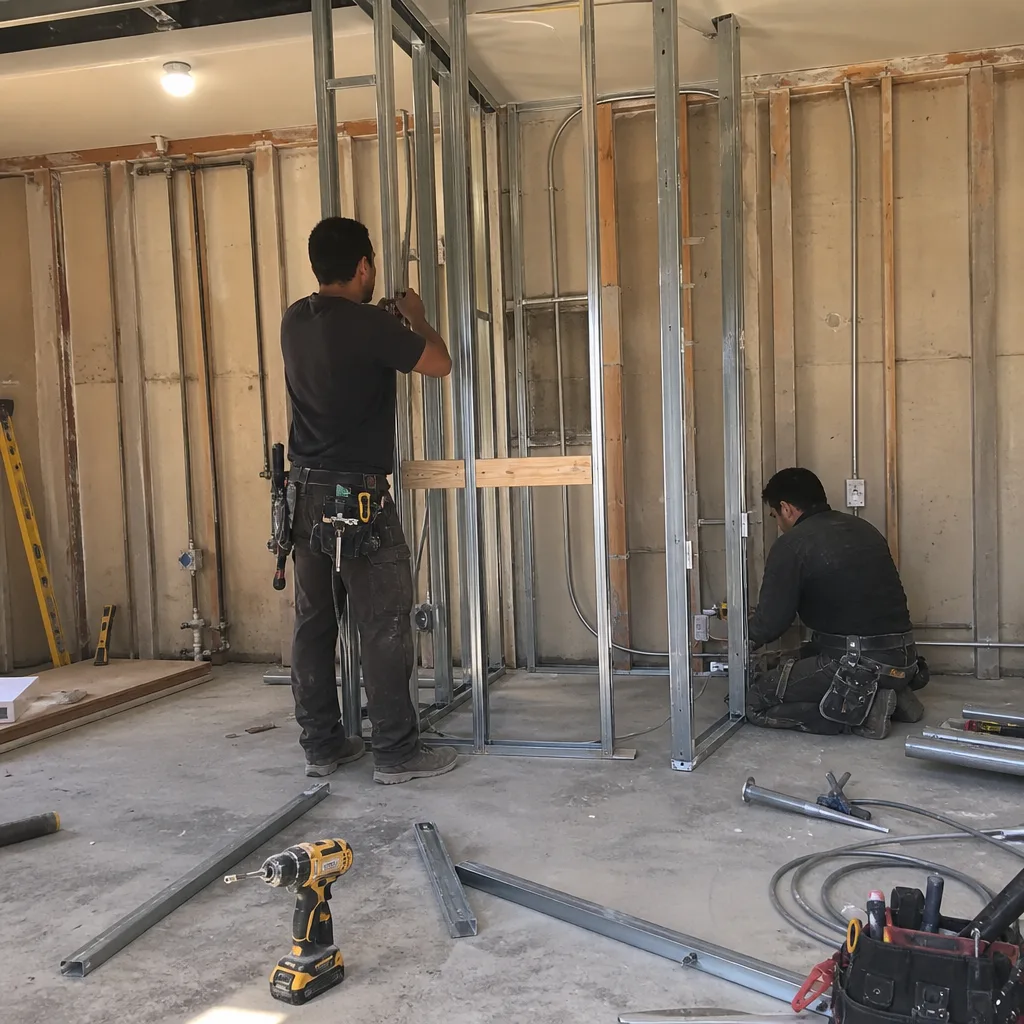
Prefab and modular ADU systems - Cover, Dvele, Mighty Buildings, Boxabl, and others - arrive with factory finishes and integrated MEP (mechanical, electrical, plumbing) packages. The maintenance profile differs from site-built construction, and the warranty terms are often more specific about required care intervals.
Factory-applied finishes on fiber cement or composite siding are typically more UV-stable than field-applied paint, but they are not immune to Santa Clarita’s thermal cycling. The expansion joints in prefab panel systems are precision-engineered; caulk replacement must use the manufacturer’s specified product to maintain the joint’s designed movement capacity. Generic caulk will fail in the first summer.
Integrated MEP packages in Dvele and Cover units often include smart-home monitoring that can supplement the sub-meter protocol. We configure these systems during our coordination phase to alert on unusual water flow or HVAC runtime patterns. The data stream becomes part of the documented record.
For Mighty Buildings units, the composite shell material has different thermal expansion characteristics than conventional framing. We specify expansion joint inspection at the two-year mark, and we coordinate factory technical support for any adjustment.
The key point: prefab maintenance is not less maintenance. It is different maintenance, governed by factory documentation rather than conventional construction knowledge. We include manufacturer maintenance schedules in our project closeout package and note the specific intervals on our clients’ calendar reminders.
Common Mistakes to Avoid
- Assuming post-2019 fire code compliance is permanent. Ember-resistant vents degrade. The code-compliant assembly in year zero may not be compliant in year three without inspection and maintenance.
- Power-washing fiber cement siding. High-pressure water drives moisture into butt joints and behind trim. Use low-pressure wash with a siding-cleaning solution, and never direct water upward at horizontal surfaces.
- Ignoring the garage conversion slab. The existing garage slab in a Santa Clarita conversion is often the most vulnerable component. Summer thermal movement and winter moisture migration concentrate at the cold joint between old and new construction.
- Skipping the spring HVAC service because “it still works.” A system that runs is not a system that runs efficiently. The kilowatt-hour penalty of a dirty coil accumulates silently.
- Using generic replacement parts on prefab systems. A non-spec caulk or filter may void the factory warranty and compromise the engineered performance of the assembly.
- Neglecting sub-meter readings during vacancy. An unoccupied ADU is when the sub-meter is most valuable. Any consumption is abnormal and demands immediate investigation.
- Grading inspection only after water enters. In Santa Clarita’s clay soils, visible water intrusion means the failure is advanced. Grade inspection is preventive, not reactive.
When to Call a Professional
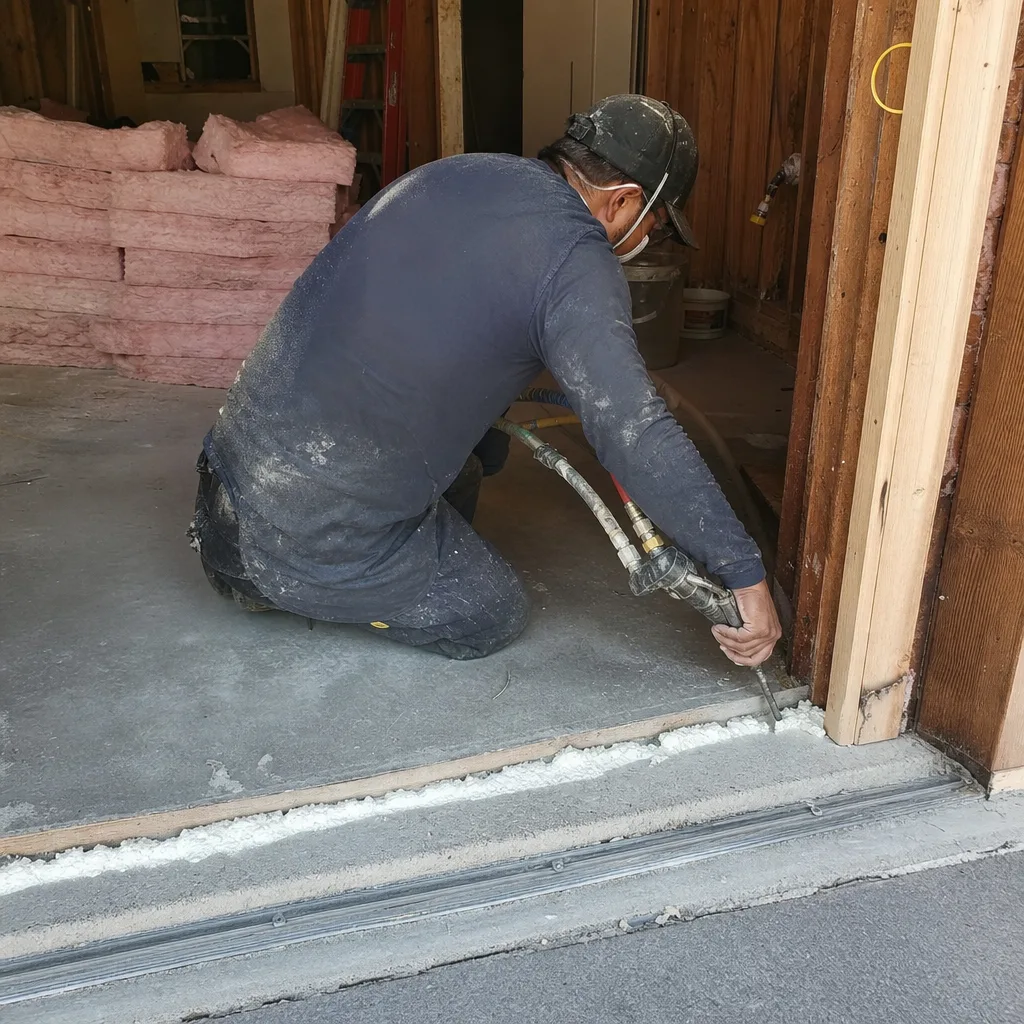
Call for professional evaluation when: ember-vent mesh shows corrosion or opening size exceeding 1/8 inch; the sub-meter indicates consumption with no fixtures running; foundation perimeter grading has reversed slope or shows new cracking; HVAC runtime has increased 15 percent or more with no occupancy change; or any prefab manufacturer maintenance interval has lapsed.
Ellery ADU Studio Santa Clarita offers free estimates in Santa Clarita for maintenance assessments, drainage corrections, and system upgrades. We also provide a Free Second Opinion on any written estimate already in hand - compare scope, documentation commitment, and warranty terms before you commit. Call (747) 294-4817 to schedule.
Frequently Asked Questions
A professional seasonal inspection and service package for an ADU in Santa Clarita typically runs $400-$800 annually, covering HVAC service, vent inspection, drainage verification, and sub-meter review. Major corrections - drainage regrading, vent replacement, or coil restoration - are quoted separately with a written price before work starts under Haven Standard Clause 1. Call (747) 294-4817 for an exact quote; estimates are free.
No. Under Haven Standard Clause 5 (No Surprises), the scope is locked at signing. Any condition discovered after work begins that requires additional scope is documented with a photo record and requires a separate written amendment before proceeding. No door-side upsells, no scope creep.
Routine maintenance - filter replacement, vent screen replacement, grading adjustment - does not require permits in Santa Clarita. Work affecting structural, electrical, or plumbing systems may require a permit; we pull all required permits and pass all inspections as part of any scope that includes them, documented in the written price.
Inspect annually in early October, before Santa Ana wind season, and after any significant fire event in your watershed. In Canyon Country and Sand Canyon, where VHSZ designation is most severe, we recommend a mid-season visual check after the first major wind event. Replacement mesh must meet the original Chapter 7A listing; generic screen does not comply.
The Santa Ana wind season deposits particulate on mini-split coils, reducing heat transfer efficiency. The system runs longer to achieve the same setpoint. A 15 percent runtime increase is common and correctable with spring coil and filter service. The sub-meter log reveals this pattern before the bill arrives.
California ADU law encourages but does not mandate separate metering. We specify a sub-meter on every project for diagnostic value: leak detection, occupancy verification, and efficiency monitoring. The installation cost is included in our written scope when specified, and the payback in prevented damage typically occurs on the first detected leak.
The Bottom Line
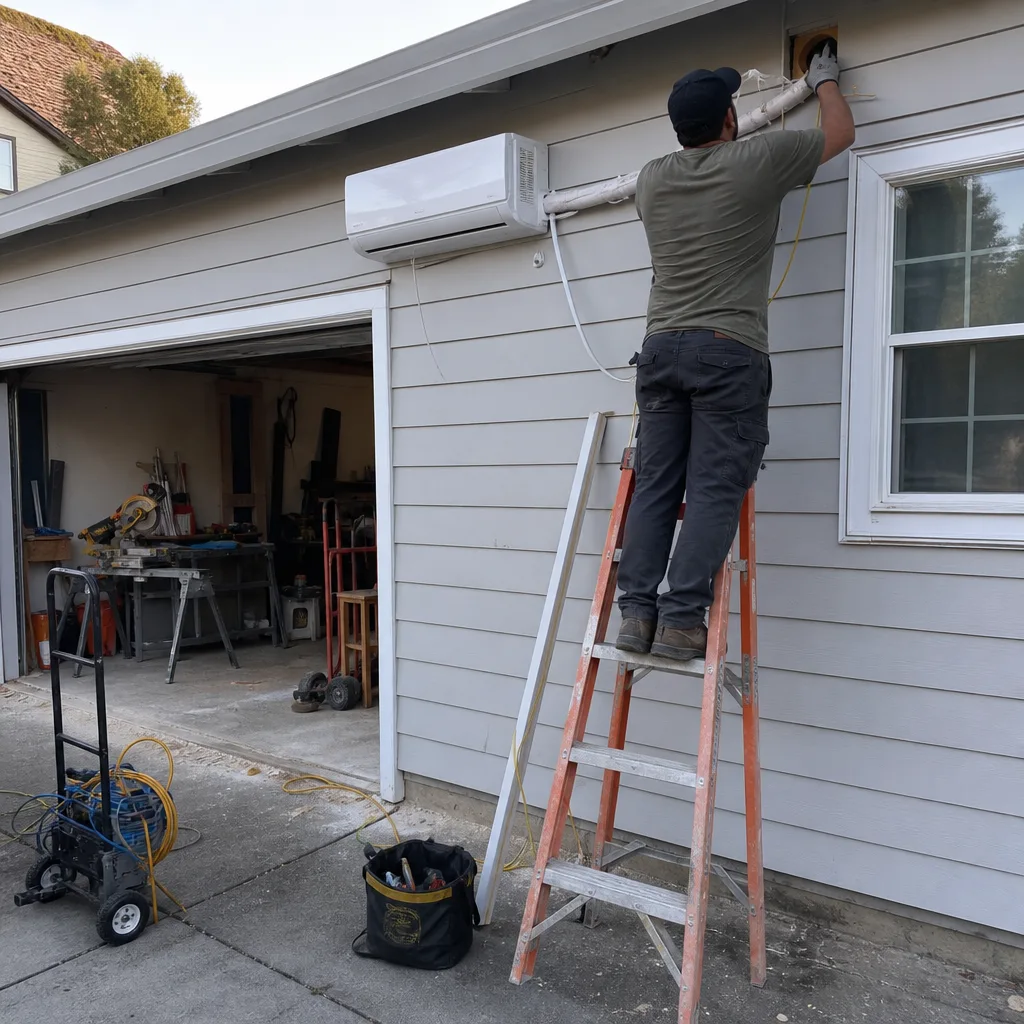
Seasonal ADU care in Santa Clarita is not a generic maintenance schedule with a local city name attached. It is a sequence of inspections and services timed to the specific climate stressors of the Santa Clarita Valley: thermal expansion at sustained triple-digit temperatures, ember intrusion during extended fire season, drainage failure on clay soils in winter concentration events, and particulate loading from Santa Ana winds that degrades HVAC efficiency before summer demand peaks. A year-round sub-meter log transforms utility data into early warning. The cost of prevention is modest; the cost of deferred maintenance, measured in foundation repair, mold remediation, or system replacement, is not. Document what you find, not what you feel, and address it before the next season turns the invisible into the catastrophic.
Written by Nadia Ellery, Owner at Ellery ADU Studio Santa Clarita, serving Santa Clarita since 2015.