
Last updated September 25, 2026
DIY vs Professional ADU: The Santa Clarita Homeowner’s Decision Guide
California’s owner-builder exemption is frequently cited in ADU forums as a cost-saving strategy - but the five-year resale restriction it triggers means a homeowner who builds a rental ADU under an owner-builder permit and then sells the property within that window has created a disclosure liability that no title company will insure without a legal opinion. In Santa Clarita, where median home turnover is 7-10 years and ADU rental income drives purchase decisions, this is not an edge case. This guide maps the actual legal and financial boundary between what a Santa Clarita homeowner can self-manage and what the permit record will penalize, using the specific language of Business and Professions Code 7044 and the inspection realities of Los Angeles County.
Quick Answer
Most Santa Clarita homeowners who consider a DIY ADU are legally permitted to act as their own general contractor under California’s owner-builder exemption, but doing so triggers a five-year occupancy and resale restriction that can void rental income projections and cloud title transfers. For the majority, the savings evaporate when you account for permit delay risk, licensed trade requirements, and the documentation stack required for refinancing or resale. A professional design-build studio like Ellery ADU Studio Santa Clarita home produces stamped drawings, inspection records, and a Certificate of Occupancy that transfers cleanly - and under our Haven Standard, every project carries a written price before work starts and a 365-Day Done Right Promise.
Table of Contents

- What California Owner-Builder Law Actually Says
- The Five-Year Resale Restriction Nobody Explains
- What a Homeowner Can Legally Self-Perform
- Where Licensed Trades Are Non-Negotiable
- The Cost-of-Errors Analysis: Three Common DIY Mistakes
- What Project Management Actually Saves (and Costs)
- The Documentation Stack and Its Dollar Value at Resale
- The Prefab and Modular Alternative
What California Owner-Builder Law Actually Says
Business and Professions Code Section 7044 allows a property owner to construct, alter, repair, or improve their own dwelling without a contractor’s license, provided they occupy the property. The statute uses the word “occupy” deliberately - it does not mean “own.” An investor who owns a rental property in Canyon Country cannot invoke the exemption. A homeowner living in the main house on a Valencia property can.
Here’s where ADU-specific interpretation matters. If you build an ADU under an owner-builder permit, the statute requires that you occupy the property, not necessarily the ADU itself. Los Angeles County building officials have generally read this to mean the owner must reside in either the primary dwelling or the ADU during construction and for the restriction period that follows. But title companies and lenders have taken a narrower view: they want evidence the owner occupies the structure they built, not just the parcel.
This ambiguity is not theoretical. In 2023, a Santa Clarita homeowner in Saugus built a garage conversion ADU under an owner-builder permit, rented it immediately, and listed the property 18 months later. The buyer’s lender flagged the permit record. The transaction stalled for six weeks while the seller obtained a legal opinion letter confirming compliance. The cost: $4,200 in attorney fees, plus a $15,000 price reduction to retain the buyer.
The statute also contains a contractor fraud presumption. If an owner-builder ADU is sold or rented within five years of final inspection, and the buyer or tenant suffers damages from construction defects, the law presumes the work was performed by an unlicensed contractor acting for financial gain. This presumption is rebuttable, but rebutting it requires documentation most owner-builders never collect: signed contracts with every subcontractor, proof of workers’ compensation coverage, and verified lien releases.
Key points from B&P 7044:
- The exemption applies only to structures intended for the owner’s personal use and occupancy
- It does not extend to structures built “for the purpose of sale or speculation”
- The five-year restriction runs from the date of final inspection, not permit issuance
- Violations are misdemeanors, and the Contractors State License Board can issue cease-and-desist orders
The Five-Year Resale Restriction Nobody Explains
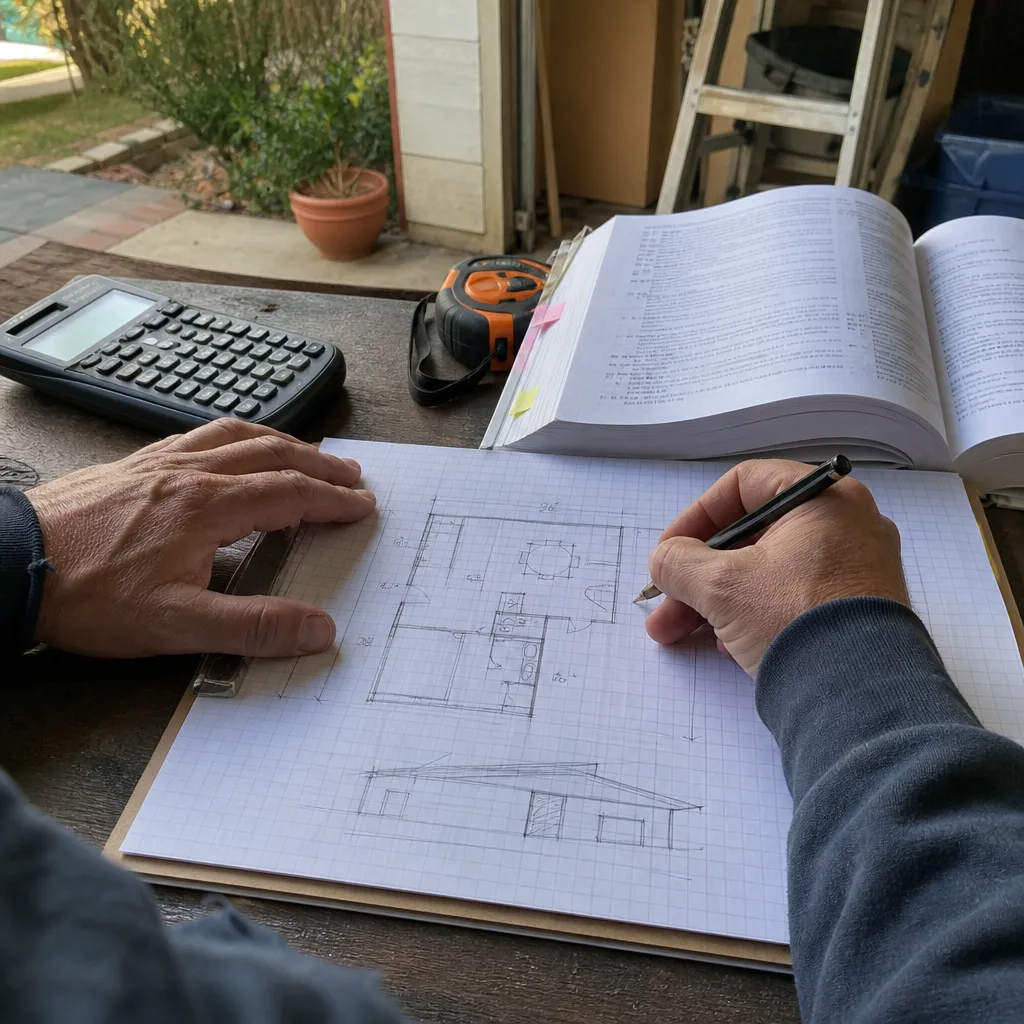
The five-year window is the most underreported provision in California ADU discussions. It does not appear in most how to build an ADU guides because it is a contractor licensing rule, not a zoning rule. Santa Clarita’s ADU ordinance - updated in 2020 and again in 2023 - streamlines setbacks and parking, but it does not override state contracting law.
What the restriction means in practice:
- Year 0-2: You cannot sell the property without disclosing the owner-builder permit and obtaining a title company exception. Most title insurers in Los Angeles County will require a legal opinion or a contractor’s retroactive sign-off.
- Year 2-5: The same restriction applies, though some title companies will accept a home inspection and indemnification letter in lieu of full legal review.
- Year 5+: The restriction expires. The permit record remains, but the fraud presumption no longer attaches.
For homeowners who bought in Santa Clarita between 2018 and 2022 at historically high prices, the five-year horizon is not abstract. Job transfers, family changes, or interest rate movements can force a sale. An ADU built to generate rental income becomes a transaction obstacle instead.
The disclosure requirement is also broader than most owners realize. California Civil Code 1102 requires disclosure of “any encumbrances or restrictions affecting the property.” An owner-builder permit with an active five-year restriction qualifies. Failure to disclose exposes the seller to post-closing litigation, even if the buyer never occupies the ADU.
In our experience at ADU Design & Permitting in Santa Clarita, roughly one in four prospective clients who initially inquire about owner-builder paths change course after reviewing the restriction timeline against their likely ownership horizon. The math is personal, but the law is fixed.
What a Homeowner Can Legally Self-Perform
Not every task on an ADU site requires a licensed contractor. Under a professionally permitted project - one where a licensed architect or design-build studio holds the permit - a homeowner can perform specific work without triggering B&P 7044’s restrictions. The key distinction: the permit holder is the licensed professional, and the homeowner acts as a volunteer laborer, not the responsible party.
Tasks generally permitted without licensure on a professionally permitted ADU:
- Demolition of non-structural elements: Removing drywall, cabinetry, fixtures, and finishes from an existing garage or interior space. Structural demolition - removing bearing walls, roof structures, or foundation elements - requires a licensed contractor’s supervision.
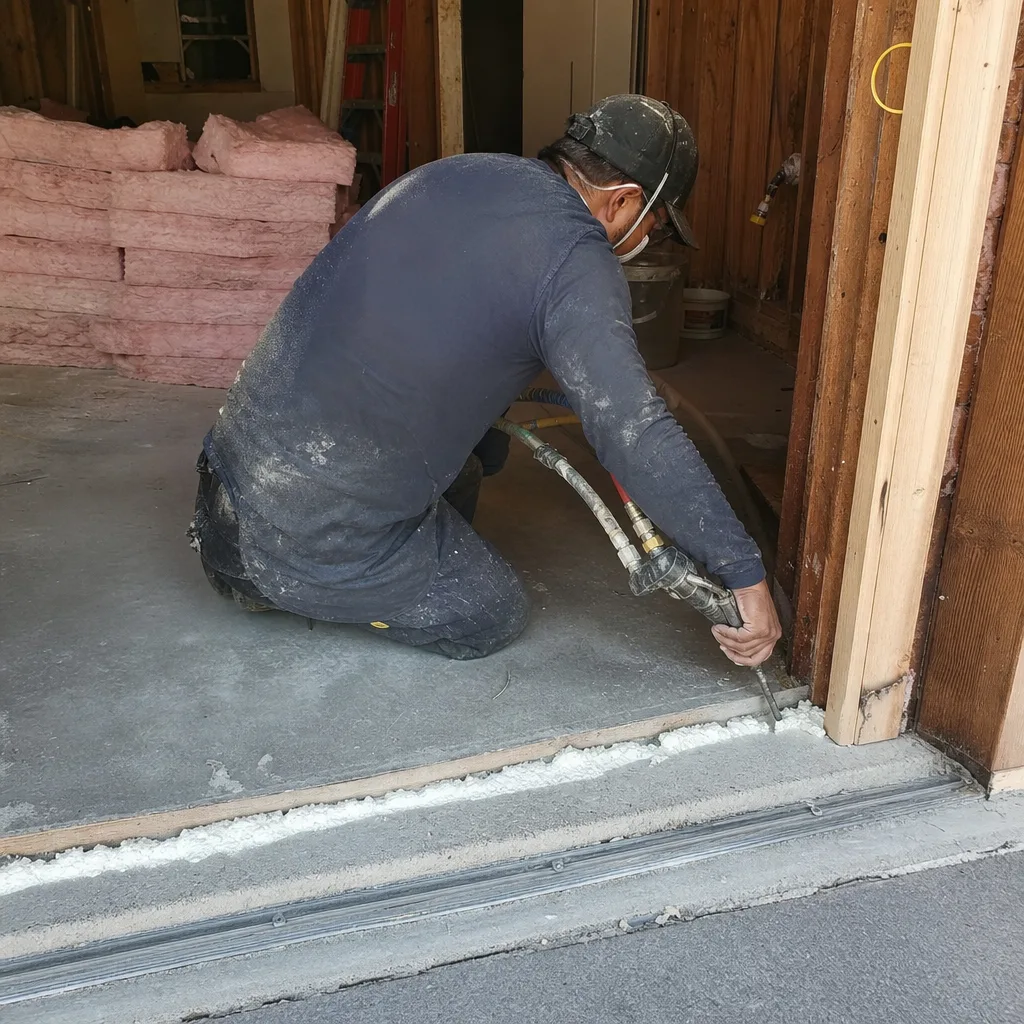
- Painting and finishing: Interior and exterior painting, staining, and sealant application after rough inspections are complete. Spray-foam insulation and fire-rated assemblies require licensed insulation contractors.
- Landscaping and hardscaping: Grading under 200 cubic yards, planter installation, and non-structural paving. Retaining walls over 4 feet, drainage systems tied to municipal storm lines, and gas or electrical runs to outdoor features require licensed trades.
- Finish carpentry: Installing trim, baseboards, shelving, and non-structural cabinetry. Kitchen and bath cabinets that include plumbing or electrical rough-in must be coordinated with licensed plumbers and electricians.
- Tile and flooring: Setting tile, hardwood, laminate, or vinyl flooring on prepared substrates. Subfloor preparation that involves structural repair or leveling compounds over concrete slabs requires inspection and often a licensed flooring contractor.
The boundary is functional, not categorical. A homeowner can paint walls. A homeowner cannot install fire-rated drywall assemblies between an attached ADU and the primary dwelling - that assembly requires inspection and must meet UL-listed system requirements. A homeowner can install a bathroom vanity. A homeowner cannot rough in the DWV (drain-waste-vent) plumbing that connects it to the municipal sewer line.
In Santa Clarita’s climate, with summer temperatures regularly exceeding 95°F and winter freeze-thaw cycles in the foothill zones of Sand Canyon and Bouquet Canyon, material selection matters even for “simple” tasks. We’ve seen homeowner-installed exterior paint fail within 18 months because the substrate wasn’t primed for high-UV exposure. The repaint cost - $3,800 on a typical 500-square-foot ADU - exceeded what a professional application would have cost originally.
Where Licensed Trades Are Non-Negotiable

California law mandates licensed contractors for specific trades regardless of who holds the permit. On an ADU project in Santa Clarita, these are not suggestions - they are inspection gates. Unlicensed work in these categories will be red-tagged at inspection, and in some cases, the building official will require removal and replacement by a licensed practitioner.
| Trade | License Required | Inspection Gate | Common DIY Attempt |
|---|---|---|---|
| Electrical | C-10 | Rough electrical, service panel, final electrical | Adding a subpanel or running 240V for HVAC |
| Plumbing | C-36 | Underground plumbing, rough plumbing, final plumbing | Tie-in to existing sewer lateral |
| HVAC | C-20 | Rough mechanical, final mechanical | Mini-split installation with refrigerant lines |
| Structural | A or B license, or C-5/C-6/C-47 | Foundation, framing, shear wall | Converting garage door opening to wall |
| Roofing | C-39 | Roofing inspection (if new roof area > 25%) | Extending roof over new ADU footprint |
| Fire protection | C-16 or C-57 | Fire sprinkler rough and final | Installing residential sprinklers in attached ADU |
The electrical panel is the most common bottleneck. Santa Clarita homes built between 1965 and 1995 typically have 100-amp or 125-amp main service panels. An ADU with electric heat, water heater, range, and laundry requires a 200-amp service minimum. Upgrading service requires Southern California Edison coordination, a C-10 electrician, and often a trench for underground service - a $4,500-$8,500 line item that owner-builders routinely underestimate by half.
Fire separation between an attached ADU and the primary dwelling is the second most common red-tag. Los Angeles County requires a 1-hour fire-rated assembly for attached units, typically achieved with Type X drywall, fire-rated doors, and sealed penetrations. The assembly must be continuous from foundation to roofline. We’ve inspected owner-builder projects where the homeowner installed standard 5/8″ drywall, believing it equivalent, only to fail inspection and face $6,000-$12,000 in remediation to open walls, install proper assemblies, and re-inspect.
The Cost-of-Errors Analysis: Three Common DIY Mistakes
Every construction project carries risk. In our experience with Garage Conversion ADU in Santa Clarita projects, the errors that generate the largest remediation bills share a pattern: they are invisible at completion, discovered at inspection or resale, and expensive to access for repair.
Mistake 1: Undersized Electrical Service
The error: Installing a 100-amp subpanel for a 600-square-foot ADU with full electric appliances, assuming the existing 200-amp main can handle the load. The actual load calculation, per NEC Article 220, includes demand factors for concurrent use that most homeowners do not apply correctly.
The discovery: SCE field engineer flags the service at meter set, or the city electrical inspector requires a load calculation that fails.
The remediation: Service upgrade to 320-amp or 400-amp, new meter base, new main panel, SCE coordination, and trenching. Typical cost in Santa Clarita: $8,500-$15,000. Timeline impact: 4-8 weeks for SCE scheduling.
The professional prevention: At Ellery ADU Studio Santa Clarita home, our permit set includes a preliminary electrical load letter based on appliance specifications. If the service requires upgrade, that line item appears in the written quote before signing - Haven Standard, Clause 1. No surprises at rough inspection.
Mistake 2: Non-Compliant Fire Separation
The error: Treating fire separation as “drywall on both sides of a wall” rather than a tested assembly with specific fastener patterns, tape compounds, and penetration sealing.
The discovery: Building inspector requires UL assembly documentation that the homeowner cannot produce. Red tag at rough inspection.
The remediation: Remove finish materials, install proper Type X or Type C drywall per UL design U419 or equivalent, re-tape with fire-rated compound, re-inspect. For a typical 20-foot shared wall: $6,000-$12,000 in labor and materials, plus delay.
The professional prevention: Our permit set specifies the exact UL assembly number for each fire-rated condition. Our crews install to that specification, and our documented photo record shows fastener spacing and penetration sealing at each inspection stage.
Mistake 3: Unpermitted Utility Connections
The error: Tapping into the existing sewer lateral or water main without a separate permit, assuming the ADU permit covers all site work. Or installing a “temporary” electrical feed from the main house panel, intending to upgrade later.
The discovery: Water district inspector at final, or SCE audit, or neighbor complaint triggers code enforcement.
The remediation: Permit amendment, possible environmental review for sewer tie-in, engineered drawings for water service sizing, and in severe cases, removal of unpermitted work. Cost range: $3,500-$25,000 depending on depth of violation and soil conditions in Santa Clarita’s variable terrain.
The professional prevention: We pull separate utility permits as needed, coordinate with Valencia Water Company or Santa Clarita Water Division, and include utility connection line items in the written scope. Under Haven Standard, Clause 5 (No Surprises), the scope is locked at signing; no door-side upsells, no scope creep.
What Project Management Actually Saves (and Costs)
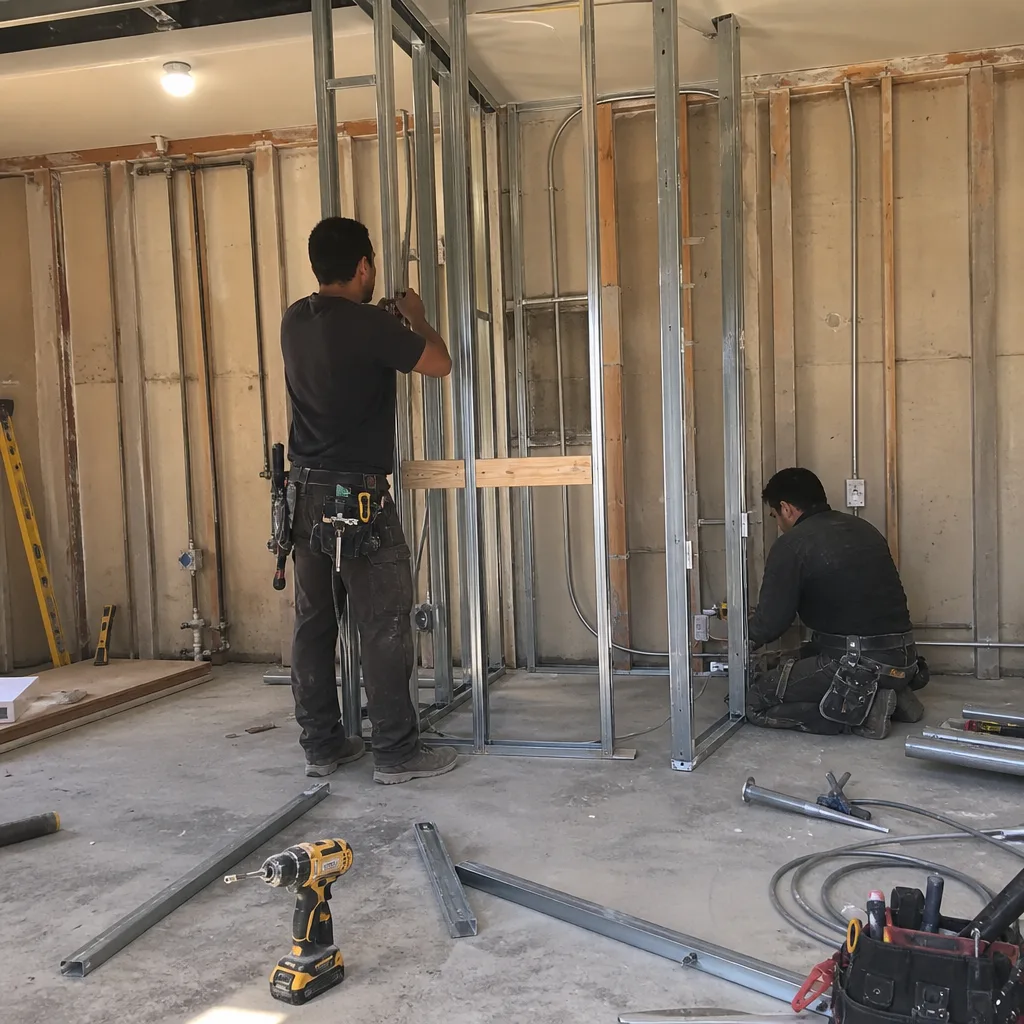
The argument for DIY often centers on project management savings: “I’ll coordinate the subs myself and save the general contractor’s overhead.” This is mathematically possible but operationally rare. Here’s what homeowner project management actually entails on a Santa Clarita ADU.
Time commitment: A typical 500-square-foot garage conversion requires 12-18 subcontractor engagements, 6-10 city inspections, and 4-6 utility coordination events. At 8 hours per week of active management - scheduling, site visits, material procurement, dispute resolution - the project consumes 200-300 hours over a 4-6 month timeline. At a conservative $75/hour value of homeowner time (the rate most Santa Clarita professionals could bill alternatively), that’s $15,000-$22,500 in foregone income.
Delay risk: Subcontractors prioritize contractors who feed them continuous work. A homeowner with one project lacks leverage. In 2024, we tracked average delay for homeowner-managed ADU projects in Los Angeles County at 6.3 weeks beyond the contracted schedule, versus 1.2 weeks for professionally managed projects. At $2,500-$4,000 per month in lost rental income or carrying costs, delay is not abstract.
Coordination liability: When a plumber’s rough-in conflicts with an electrician’s panel location, the professional design-build studio resolves it with revised drawings and a change order. The homeowner must negotiate between two independent contractors, each blaming the other. Without a single-contract entity, there is no one to absorb the cost of coordination failure.
What project management does save: The general contractor’s overhead and profit markup, typically 15-25% on hard costs. On a $150,000 ADU, that’s $22,500-$37,500. Against the time value, delay risk, and coordination liability, the net savings for most homeowners is negative - and that assumes zero errors requiring remediation.
The Documentation Stack and Its Dollar Value at Resale
A professionally permitted and built ADU produces a specific paper stack. Each document has a function at resale, refinance, or rental. Owner-builders often lack several items, and the absence carries a quantifiable cost.
| Document | Source | Resale/Refinance Function | Cost to Retrofit if Missing |
|---|---|---|---|
| Stamped architectural drawings | Licensed architect or design-build studio | Appraiser verifies square footage and permit match; lender requires for cash-out refinance | $3,500-$8,000 for as-built drawings and structural engineering |
| Permit set with plan check corrections | City building department | Title company verifies no open permits; buyer’s inspector cross-references | $1,500-$4,000 for permit research and retroactive compliance |
| Inspection records (all passes) | City building department | Lender requires Certificate of Occupancy; insurance underwriter verifies code compliance | Impossible to retrofit - may require partial demolition and re-inspection |
| Certificate of Occupancy | City building department | Required for legal rental; required for most purchase loans; required for ADU-specific insurance | Full re-inspection at current code, potentially $10,000+ if code has changed |
| Final lien releases | All subcontractors and material suppliers | Title company requires for clear title; prevents post-sale mechanic’s lien claims | $500-$2,000 for affidavit of publication and bonded title process |
| Written warranty | Contractor or design-build studio | Buyer negotiation point; lender confidence factor | None available retroactively for owner-builder work |
| Documented photo record | Contractor or design-build studio | Dispute resolution; insurance claim support; buyer confidence | None - moment is lost |
The total documentation gap for a typical owner-builder project: $15,000-$35,000 to reconstruct, plus irrecoverable items. This is not theoretical. In 2024, a Stevenson Ranch homeowner contacted us to “finish the paperwork” on a self-built ADU from 2021. The city had no record of two intermediate inspections. The solution: open the walls for visual verification by a city inspector, then close and repaint. Cost: $18,400. The homeowner’s original savings from self-management: approximately $12,000.
Under our Haven Standard, every Ellery ADU Studio Santa Clarita client receives the complete stack, plus our documented photo record on every visit - clients receive evidence of what was found and what was done, not a summary of how it felt. See our more guides & resources for additional homeowner guidance. The 365-Day Done Right Promise is backed in writing: if the finished ADU is not built to the permitted drawings, we make it right.
The Prefab and Modular Alternative
For homeowners who want to compress timeline and reduce site labor without accepting owner-builder risk, prefab and modular ADU systems offer a third path. These are not “DIY” in the traditional sense - the modules arrive substantially complete - but they require the same permitting, foundation, utility, and site coordination as stick-built projects.
Ellery ADU Studio Santa Clarita specifies and coordinates prefab and modular systems from brands including Abodu, Cover, Dvele, Mighty Buildings, Boxabl, Plant Prefab, Tuff Shed, and James Hardie. The value of a design-build studio in this context is integration: we model the module within the site constraints, coordinate the foundation and utility rough-in to the manufacturer’s specification, and hold the single contract that covers both the prefab delivery and the site work.
Common misconceptions about prefab:
- “Prefab skips permitting.” False. Every prefab ADU in Santa Clarita requires the same plan check, structural engineering review, and inspection sequence as site-built. The manufacturer provides DSA or HCD certification; the local jurisdiction verifies site-specific compliance.
- “Prefab is always cheaper.” Sometimes true for standardized garage conversions, less often for custom detached units with complex site access. The savings are in labor and schedule, not materials.
- “I can order direct and save the middleman.” The “middleman” in this case is the entity responsible for foundation accuracy, utility connection, and final inspection. Manufacturer-direct purchases typically exclude site work, leaving the homeowner to coordinate the most error-prone portion of the project.
In Santa Clarita’s hillside zones - parts of Sand Canyon, Fair Oaks Ranch, and the northern canyon areas - module delivery requires crane placement analysis and sometimes road closure permits. These are not homeowner-managed logistics. Our New Detached ADU in Santa Clarita service includes site feasibility as a standard deliverable, with crane radius diagrams and utility clearance plans in the permit set.
Common Mistakes to Avoid
- Assuming the owner-builder exemption applies to rental ADUs without occupancy restriction. B&P 7044 requires owner occupancy; rental income strategies must account for the five-year holding period or use a professionally permitted path.
- Pulling an owner-builder permit to “save money” with no intention of self-performing work. This is contractor fraud under California law. The exemption is for owners who actively participate in construction, not for owners who hire unlicensed labor under their name.
- Skipping the electrical load calculation. Santa Clarita’s summer cooling loads and all-electric appliance trends make panel upgrades common. Budget for it in the initial scope, not at rough inspection.
- Treating fire separation as a finish detail rather than a structural assembly. The 1-hour rating is an assembly, not a material. UL design numbers matter, and inspectors will ask for them.
- Failing to verify utility capacity before finalizing ADU size. Water service in older Santa Clarita neighborhoods may be 3/4″ or 1″; a full ADU often requires 1″ or larger. SCE transformer capacity varies by circuit. These are not discoverable by visual inspection.
- Neglecting to document every phase with photos and receipts. The documentation stack is your only defense in a future sale, dispute, or insurance claim. If you didn’t photograph it, it didn’t happen.
- Comparing DIY cost estimates to professional quotes without including time value, delay risk, and documentation cost. The spreadsheet that shows $30,000 savings rarely includes the 300 hours, the 6-week delay, or the $15,000 documentation gap.
When to Call a Professional
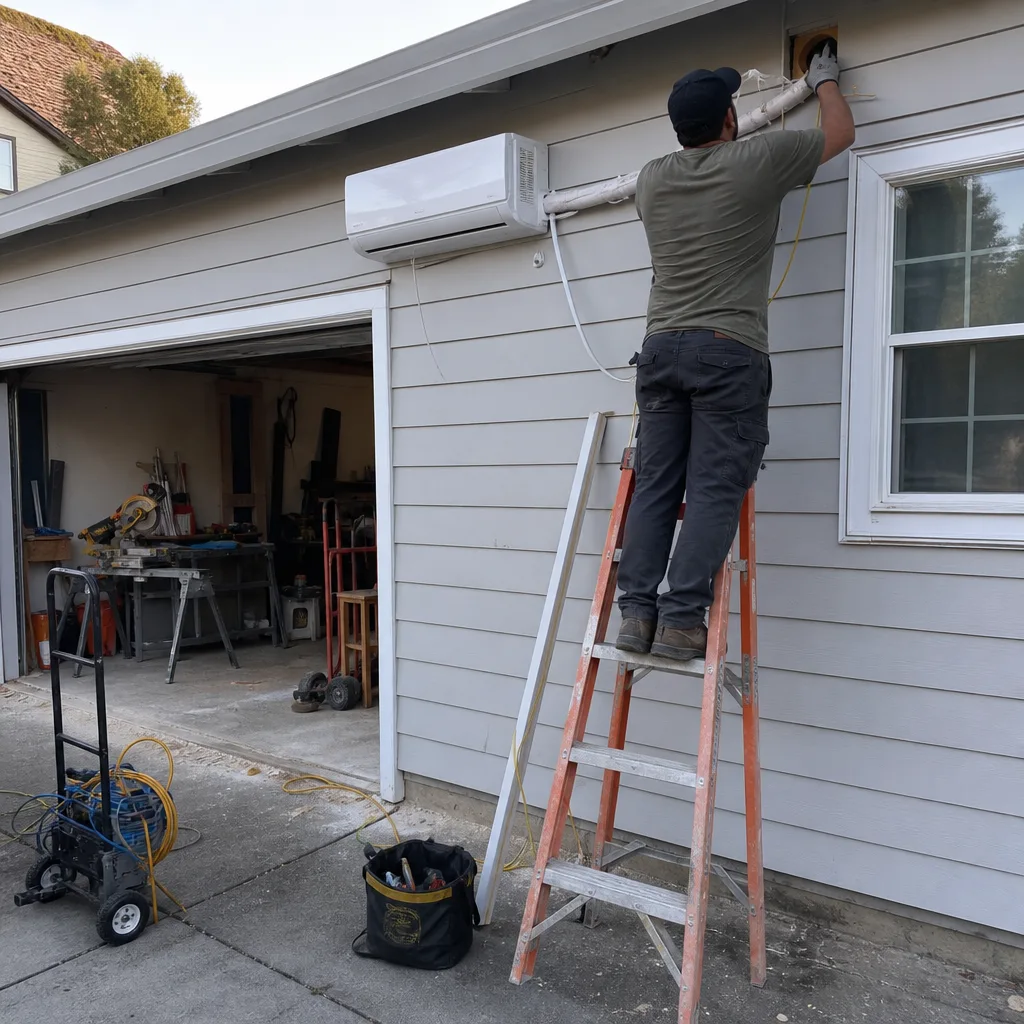
Call a professional when the permit record must transfer cleanly - which is almost always if you might sell, refinance, or use the ADU as collateral within ten years. Call a professional when the project involves electrical service upgrades, fire-rated assemblies, or utility connections that cross property lines or municipal infrastructure. Call a professional when your time has value and your schedule has constraints.
Ellery ADU Studio Santa Clarita offers free estimates in Santa Clarita - call (747) 294-4817. We also provide a Free Second Opinion on any written estimate already in hand. Every project is quoted with a written price before any work begins, per Haven Standard, Clause 1. The words “call for a quote” do not appear on our site because the quote is what you receive when you call, not a gate you must pass through.
Frequently Asked Questions
Yes, under California Business and Professions Code 7044, but only if you occupy the property and accept a five-year restriction on sale or rental that creates title and disclosure liabilities. For most Santa Clarita homeowners, the legal and financial exposure exceeds the savings. Call (747) 294-4817 for a written estimate on a professionally permitted path - estimates are free.
Garage conversion ADUs typically run $85,000-$165,000 all-in, drawings through final inspection, when professionally built. New detached ADUs in Santa Clarita range $175,000-$340,000 depending on size, site conditions, and finish level. DIY hard costs may be 15-25% lower, but when you include time value, delay risk, and documentation gap remediation, the net savings for most homeowners is negative. We provide written line-item quotes before any work starts - call (747) 294-4817.
You must disclose the owner-builder permit and the active restriction. Most title companies will require a legal opinion letter or contractor sign-off, costing $2,000-$5,000 and delaying closing. Some buyers will walk. The restriction runs from final inspection date, not permit issuance. A professionally permitted ADU carries no such restriction and transfers with clean title.
On a professionally permitted project, you can perform demolition of non-structural elements, painting, landscaping, finish carpentry, and flooring installation without triggering licensing requirements. Structural work, electrical, plumbing, HVAC, roofing, and fire protection require licensed contractors. The boundary is functional: if it affects life safety or requires inspection, it likely requires a license.
The city will issue permits to property owners who demonstrate compliance with zoning, building code, and structural requirements. However, the permit holder is legally responsible for code compliance and inspection scheduling. Most owner-builders underestimate the plan check revision cycle, which averages 2-3 rounds in Los Angeles County. Our permit sets include pre-submission peer review to reduce plan check rounds - a service that pays for itself in schedule savings.
Yes. Los Angeles County requires a Certificate of Occupancy for any dwelling unit offered for lease. Unpermitted ADUs are subject to code enforcement, fines, and tenant relocation requirements under state habitability law. A Certificate of Occupancy requires passed inspections for all trades, which requires permitted work performed by licensed contractors or owner-builders under proper exemption. The certificate is also required for most landlord insurance policies and for any future sale or refinance.
The Bottom Line
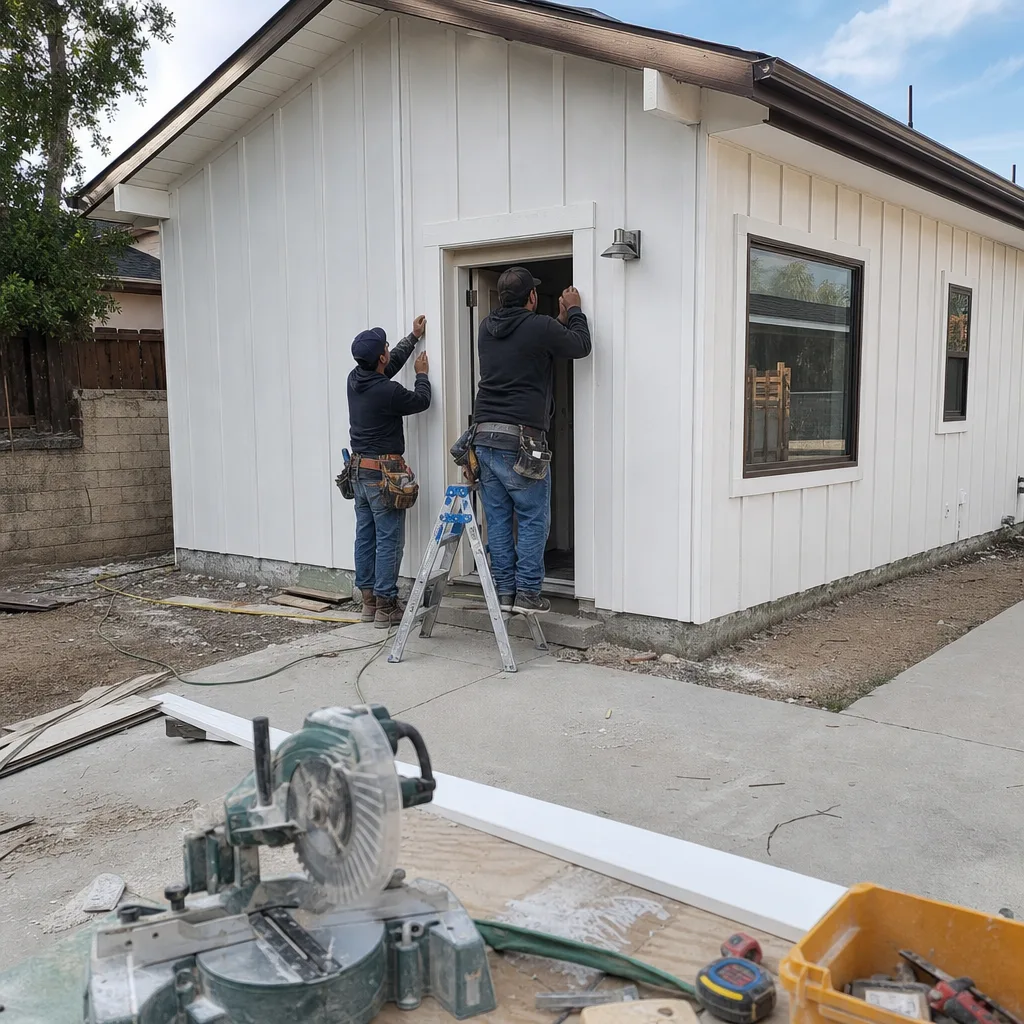
Owner-builder ADU construction in Santa Clarita is legally available but financially and legally constrained in ways that most online guides do not disclose. The five-year resale restriction, the contractor fraud presumption, and the documentation gap at transfer make the “savings” illusory for homeowners with normal ownership horizons and normal risk tolerance. The tasks a homeowner can safely self-perform are real and meaningful, but they are finish work, not structural or mechanical work. The documentation stack that a professional design-build studio produces - stamped drawings, inspection records, Certificate of Occupancy, final lien releases, written warranty - has a quantifiable value at resale that DIY paths cannot replicate. For homeowners who want rental income, property appreciation, and transaction flexibility, professional permitting and construction is not a luxury. It is the baseline for a sound investment.
Written by Nadia Ellery, Owner at Ellery ADU Studio Santa Clarita, serving Santa Clarita since 2015.